
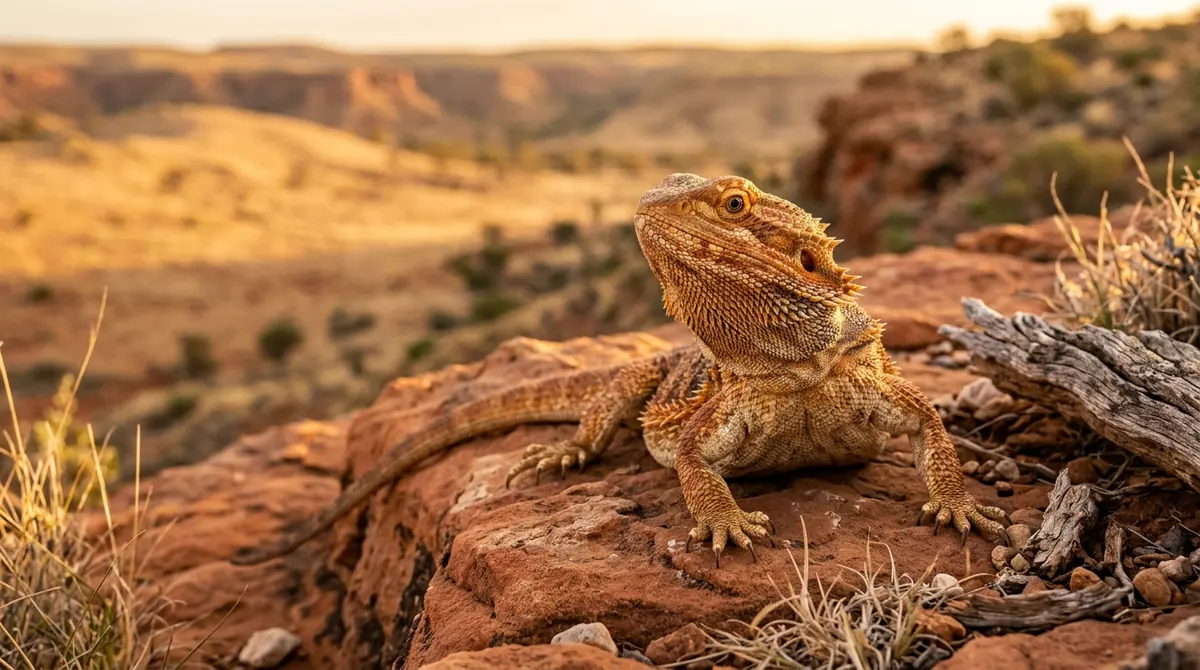
Bearded dragon care starts with more than a comfortable enclosure and a bowl of food. These Australian lizards need carefully managed temperatures, appropriate ultraviolet lighting, a balanced diet, opportunities to move and explore, and regular health monitoring.
Bearded dragons are often described as beginner-friendly reptiles because many tolerate gentle handling and become accustomed to predictable routines. However, their environmental needs are more specialized than their calm appearance might suggest.
Incorrect heating, inadequate UVB exposure, and nutritional imbalances can contribute to serious health problems. Understanding these requirements before bringing a bearded dragon home is one of the most important steps in responsible ownership.
In this bearded dragon care guide, you'll learn how to:
- Choose an appropriately sized enclosure and create a safe habitat.
- Provide suitable heat, UVB lighting, and humidity.
- Understand basic feeding and nutrition requirements.
- Establish a practical daily and weekly care routine.
- Recognize common behaviors and possible signs of illness.
- Prepare for the long-term financial and veterinary responsibilities of reptile ownership.
This guide focuses primarily on the central bearded dragon (Pogona vitticeps), the species commonly kept as a pet in the United States.
Table of Contents
Bearded Dragon Care at a Glance
Before exploring the details, here's a quick overview of the essentials.
| Care factor | General guidance |
|---|---|
| Scientific name | Pogona vitticeps |
| Native habitat | Arid and semi-arid regions of Australia |
| Adult length | Commonly around 18–24 inches, including the tail |
| Lifespan | Often 10–15 years with appropriate care |
| Activity pattern | Diurnal — active during the day |
| Diet | Omnivorous: leafy greens, vegetables, and suitable feeder insects |
| Adult enclosure | Aim for at least 48 × 24 × 24 inches (approximately 120 gallons) |
| Lighting | Appropriate reptile UVB lighting and a separate basking heat source |
| Temperature | A regulated warm basking area and cooler retreat |
| Humidity | Generally low, with a measured gradient and adequate ventilation |
| Housing | Usually best kept individually |
| Veterinary care | A reptile-experienced veterinarian |
Important: These are introductory reference points, not a substitute for measuring your actual enclosure. Exact equipment selection, temperatures, UVB exposure, and nutrition should be matched to the animal, enclosure design, and current professional guidance.
What Is a Bearded Dragon?
A bearded dragon is a medium-sized lizard belonging to the genus Pogona. The central bearded dragon, Pogona vitticeps, is widely kept in captivity.
Its name comes from the expandable area of skin beneath its throat. When threatened, stressed, or communicating, a bearded dragon may expand and darken this area, creating a beard-like appearance.
In the wild, these reptiles inhabit environments that include open woodlands, scrublands, and semi-arid landscapes. They spend time on the ground but also climb rocks, branches, and other elevated surfaces.
Bearded dragons are ectothermic, meaning their body temperature is regulated largely through environmental heat sources.
They bask to warm themselves and move toward cooler or shaded areas when necessary. This behavior helps regulate their body functions, including digestion and activity.
A suitable captive habitat must allow them to make these choices.
Are Bearded Dragons Good Pets for Beginners?
Bearded dragons can be suitable for committed first-time reptile keepers, but they are not low-maintenance pets.
Their advantages include relatively predictable daytime activity, recognizable behavior, and the ability of many individuals to tolerate calm, gentle handling.
However, prospective owners must be prepared for:
- Specialized lighting and heating equipment.
- A relatively large enclosure.
- Regular insect and fresh vegetable purchases.
- Routine cleaning and environmental monitoring.
- Access to a veterinarian experienced with reptiles.
- Potentially 10–15 years or more of ongoing responsibility.
They are often easier to observe and interact with than some more delicate reptile species, but proper husbandry still requires substantial preparation.
A useful rule for new owners is to have the entire enclosure running correctly before acquiring the animal.
Bearded Dragon Habitat Setup
A suitable habitat is the foundation of bearded dragon health.
The enclosure must provide sufficient room for movement, a warm basking area, cooler areas, hiding places, and enrichment.
What Size Tank Does a Bearded Dragon Need?
For an adult central bearded dragon, a commonly recommended modern minimum is approximately 48 inches long × 24 inches wide × 24 inches high, often described as a 4 × 2 × 2-foot enclosure.
This provides approximately 120 gallons of volume.
Larger enclosures can offer additional opportunities for climbing, exploration, exercise, and environmental choice, provided heating and UVB exposure remain appropriate.
Some older veterinary care sheets list smaller minimum enclosures. These should not automatically be treated as ideal modern housing standards.
When choosing an enclosure, consider floor area and usable dimensions rather than relying on gallon capacity alone.
An appropriately sized enclosure should allow:
- A basking site large enough for the animal's body.
- A distinct cooler zone.
- At least two accessible hiding areas.
- Safe climbing opportunities.
- Space to turn, walk, and explore.
- Appropriate distances between the animal and overhead lighting.
Can Two Bearded Dragons Live Together?
Generally, housing bearded dragons individually is the safer approach.
They are not social in the same way as many mammals, and sharing an enclosure may lead to competition for basking locations, food, or space.
Fighting, stress, and injury can occur, particularly as animals mature.
For beginners, plan on one bearded dragon per enclosure.
Choosing the Right Substrate
Substrate is the material covering the bottom of the enclosure.
There is no single universally suitable substrate for every bearded dragon, and recommendations differ among husbandry sources.
Common options include:
Paper towels: Easy to replace and useful for temporary, quarantine, or health-monitoring setups.
Textured tile or other suitable solid surfaces: Easier to spot-clean, although they do not provide natural digging opportunities.
Appropriate naturalistic loose substrate: May support digging and natural behavior in a healthy animal when used in a correctly managed enclosure.
Loose substrate requires careful selection and maintenance. Risk depends on the material, hygiene, feeding practices, and overall husbandry.
Avoid sharp gravel, hazardous wood chips, and products that encourage accidental ingestion. Do not assume that calcium-based sand is safe simply because it is marketed for reptiles.
When uncertain, consult a reptile veterinarian or qualified husbandry specialist before introducing a new substrate.
Essential Enclosure Accessories
A well-designed setup generally includes:
- A stable basking platform.
- At least one hide near the warm end and another toward the cooler end.
- Secure climbing branches or structures.
- A shallow, accessible water dish.
- Appropriate substrate.
- Digital temperature monitoring equipment.
- A humidity gauge.
- Suitable UVB and basking lighting.
- Guards or barriers to prevent contact with hot equipment.
Avoid unstable rocks, exposed heating elements, sharp decorations, and furnishings that could trap or injure the reptile.
Related guide: Bearded Dragon Tank Setup — enclosure dimensions, materials, substrate comparisons, and complete setup instructions.
Bearded Dragon Lighting and Heating Requirements
Heating and lighting are among the most important aspects of bearded dragon care.
A bearded dragon needs more than a warm enclosure. It needs access to appropriate heat, UVB radiation, visible light, and shaded retreats.
These environmental conditions influence activity, appetite, digestion, and calcium metabolism.
Understanding the Temperature Gradient
A temperature gradient allows a bearded dragon to move between warmer and cooler areas.
The enclosure should not be heated to the same temperature throughout.
A practical setup includes:
- A warm basking location where the animal can elevate its body temperature.
- A warm surrounding area.
- A cooler area where it can retreat.
- Shaded hiding spaces.
Published recommendations differ partly because they describe different measurements, such as air temperature versus the surface temperature of a basking rock.
For example, the RSPCA describes a bright, warm end around 100–108°F (38–42°C) and a cooler end around 72–79°F (22–26°C). Other veterinary guides give somewhat different ranges.
These figures should not be applied interchangeably without understanding the measurement method.
For accurate monitoring:
- Use digital probe thermometers to check air temperatures.
- Use an infrared temperature gun to evaluate suitable basking surfaces.
- Monitor the warm and cool ends separately.
- Use appropriate thermostatic controls where required.
- Check measurements at the animal's actual resting and basking locations.
Avoid relying on a single stick-on thermometer or an unverified heat-lamp wattage.
Why UVB Lighting Matters
Ultraviolet B (UVB) radiation allows bearded dragons to synthesize vitamin D3, which plays a critical role in calcium regulation.
Inadequate UVB exposure, especially alongside poor nutrition, may contribute to metabolic bone disease.
A suitable reptile UVB system should provide appropriate exposure in the basking zone while leaving shaded areas accessible.
High-output linear UVB fixtures are widely recommended for suitably sized enclosures.
However, the correct fixture depends on:
- The lamp's UVB output.
- Its distance from the animal.
- Reflector design.
- Mesh or other barriers.
- The size and layout of the enclosure.
- The animal's ability to move into shade.
UVB cannot pass effectively through ordinary window glass, so placing an enclosure beside a sunny window does not replace proper reptile UVB lighting.
Lamp output also changes over time. Follow the manufacturer's replacement guidance and, where possible, measure exposure using a suitable UV Index meter.
How Many Hours of Light Do Bearded Dragons Need?
Bearded dragons are active during the day and need a consistent day-night cycle.
A common starting schedule is approximately 12 hours of light followed by 12 hours of darkness, although seasonal schedules may vary.
An automatic timer can help maintain consistency.
Bright white, red, or blue nighttime lights are generally unnecessary and may interfere with normal darkness.
If overnight temperatures fall below an appropriate threshold, a properly controlled, non-light-emitting heat source may be needed.
What Humidity Do Bearded Dragons Need?
Bearded dragons generally require relatively dry, well-ventilated environments.
The RSPCA recommends approximately 30–40% relative humidity at the cool end, while other veterinary sources provide somewhat different ranges.
Humidity readings naturally vary with temperature, time of day, and location within the enclosure.
Use a digital hygrometer and monitor conditions rather than relying on assumptions.
Persistently excessive moisture, inadequate ventilation, and wet substrate can increase husbandry-related health risks.
Related guide: Bearded Dragon Lighting and Heating — detailed UVB placement, basking measurements, thermostats, and equipment selection.
What Do Bearded Dragons Eat?
Bearded dragons are omnivores. Their diet includes plant matter and suitable animal-based food, primarily feeder insects.
Their nutritional requirements change as they mature.
Young dragons generally need a greater proportion of appropriately sized insects to support growth, while adults typically consume more leafy greens and vegetables.
The exact feeding schedule and dietary proportions depend on age, body condition, activity, health, and veterinary guidance.
Best Vegetables and Leafy Greens for Bearded Dragons
A varied selection of appropriate leafy greens can form an important part of an adult bearded dragon's diet.
Common examples include:
- Collard greens.
- Mustard greens.
- Turnip greens.
- Dandelion greens from pesticide-free sources.
- Endive.
- Escarole.
- Watercress.
Other suitable vegetables can contribute variety when selected and prepared appropriately.
Food should be clean, fresh, and cut into manageable pieces.
Avoid depending on one vegetable as the entire plant-based diet.
A balanced approach is more important than offering large quantities of a single supposedly perfect food.
What Insects Can Bearded Dragons Eat?
Suitable feeder insects may include:
- Appropriately sized crickets.
- Dubia roaches, where legally available.
- Black soldier fly larvae.
- Other captive-raised feeder insects selected according to nutritional suitability.
Insect variety can support nutritional diversity, but not every insect has the same fat, calcium, or phosphorus content.
Some insects are more appropriate as occasional foods than everyday staples.
Feeders should come from reputable sources rather than being collected outdoors, where pesticide exposure and other risks may be difficult to assess.
Where appropriate, insects should be gut-loaded, meaning they receive suitable nutritious food before being offered to the reptile.
Can Bearded Dragons Eat Fruit?
Some fruits may be offered occasionally, but fruit should not replace leafy greens or suitable feeder insects.
Fruit generally contains more sugar and is not an essential foundation of a bearded dragon's diet.
The suitability of a particular fruit depends on its nutritional characteristics, preparation, and the animal's needs.
Rather than assuming that all fruits are safe, verify each food individually.
Calcium and Vitamin Supplements
Calcium and vitamin supplementation can be important, particularly for growing animals.
However, supplement schedules vary depending on age, diet, UVB provision, and the specific product.
Excessive supplementation can also create health problems.
A reptile veterinarian can help establish an appropriate schedule for calcium, vitamin D3, and multivitamin products.
Do not combine multiple supplements simply because they are marketed for bearded dragons.
Water and Hydration
Provide clean, accessible drinking water, even if a bearded dragon rarely appears to drink from its bowl.
Replace water daily and whenever it becomes dirty.
Dietary moisture also contributes to hydration.
Persistent dehydration signs, abnormal stools, weakness, or reduced appetite deserve veterinary attention rather than reliance on home remedies.
Related guide: Bearded Dragon Diet — food lists, age-based feeding, insect nutrition, and supplement considerations.
Daily and Weekly Bearded Dragon Care Checklist
A consistent routine helps owners notice environmental problems and changes in behavior before they become serious.
Daily Care Checklist
- Check warm-end and cool-end temperatures.
- Confirm UVB and heat equipment are operating properly.
- Observe the reptile's activity, posture, and behavior.
- Provide the appropriate food for its age and needs.
- Replace drinking water.
- Remove leftover fresh food.
- Remove visible waste and soiled substrate.
- Check that hides, branches, and basking surfaces remain secure.
- Note unusual appetite, movement, or stool changes.
Weekly Care Checklist
- Inspect lighting fixtures, guards, and electrical equipment.
- Review temperature and humidity records.
- Clean and disinfect accessories as appropriate.
- Inspect the enclosure for damage, waste buildup, or unsafe furnishings.
- Review the animal's weight and body condition when appropriate.
- Check feeder insect storage and nutrition.
- Refresh or rotate safe enrichment items when useful.
A fuller enclosure-cleaning schedule depends on substrate type, enclosure design, and the animal's health. Daily spot-cleaning is not a substitute for periodic thorough cleaning.
Keep a simple log of weight, appetite, shedding, stool patterns, and environmental readings. This can help a reptile veterinarian identify changes over time.
How to Handle a Bearded Dragon Safely
Many bearded dragons tolerate human handling, but their comfort varies between individuals.
A newly acquired dragon may need time to become accustomed to its surroundings before regular handling begins.
Approach calmly and avoid sudden movements.
When lifting a bearded dragon:
- Approach from a direction where it can see you.
- Gently support the chest and body.
- Support all four legs and the tail as appropriate.
- Keep the animal close to a stable surface.
- Return it to the enclosure if it shows persistent stress.
Never lift a bearded dragon by its tail.
Avoid forcing interaction, particularly while the reptile is frightened, unwell, or struggling to escape.
Signs a Bearded Dragon May Be Stressed
Possible signs include:
- Repeated attempts to escape.
- Persistent darkening of the beard.
- Defensive posturing.
- Hissing or opening the mouth in response to a perceived threat.
- Avoiding handling.
- Unusual hiding or changes in activity.
These behaviors require context. For example, mouth opening during basking can be a normal thermoregulatory behavior, while open-mouth breathing accompanied by other symptoms may suggest illness.
Observe the entire situation rather than treating a single behavior as a diagnosis.
Understanding Common Bearded Dragon Behaviors
Bearded dragons communicate through posture, movement, and changes in appearance.
Learning about these behaviors can help owners better understand their animals.
Head Bobbing
Head bobbing may occur during territorial displays, courtship, or other social interactions.
Interpretation depends on the situation and the individual.
Arm Waving
Some bearded dragons slowly lift and move a forelimb.
This behavior has been associated with social signaling, particularly in interactions involving other dragons.
Beard Darkening
A beard may darken during stress, defensive displays, social activity, or changes in body condition.
Persistent darkening combined with lethargy or other abnormal signs warrants closer investigation.
Glass Surfing
Repeatedly moving against enclosure walls may occur when an animal is attempting to explore or escape.
Possible contributing factors include environmental stress, reflections, inadequate space, or other enclosure conditions.
If the behavior is frequent, review the habitat and overall health.
What Is Bearded Dragon Brumation?
Brumation is a seasonal reduction in activity and metabolism observed in many reptiles.
A bearded dragon entering brumation may spend more time hiding, become less active, or reduce food intake.
However, illness can resemble brumation.
Do not automatically assume that loss of appetite, weakness, or prolonged inactivity is normal seasonal behavior.
A veterinarian experienced with reptiles should evaluate concerning changes, particularly in a young, underweight, or previously ill dragon.
Related guide: Bearded Dragon Brumation — seasonal behavior, possible warning signs, and veterinary considerations.
Common Bearded Dragon Health Problems
Even with careful husbandry, bearded dragons can develop health problems.
Some conditions are strongly associated with inappropriate lighting, diet, enclosure conditions, or sanitation.
Owners should monitor changes and seek professional veterinary advice rather than attempting to diagnose illnesses from internet symptom lists.
Metabolic Bone Disease
Metabolic bone disease is a serious condition associated with disturbances in calcium and mineral metabolism.
Inadequate UVB exposure, poor dietary balance, and inappropriate supplementation can contribute to the problem.
Possible signs include:
- Weakness.
- Tremors.
- Difficulty moving.
- Abnormal limb positioning.
- Jaw or skeletal changes.
- Poor growth.
Suspected metabolic bone disease requires veterinary evaluation.
Parasites and Digestive Problems
Changes in stool, unexplained weight loss, poor appetite, or abnormal digestive behavior may indicate a health problem.
Potential causes include parasites, dietary issues, environmental conditions, and other illnesses.
Veterinarians may recommend fecal testing or additional examinations when appropriate.
Respiratory Problems
Unusual breathing sounds, persistent open-mouth breathing away from normal basking behavior, nasal discharge, or marked lethargy may indicate illness.
These signs require prompt veterinary assessment.
Shedding Difficulties
Healthy bearded dragons periodically shed their outer skin as they grow.
Shedding frequency depends on age and growth.
Retained skin around toes or the tail may become problematic, particularly when circulation is affected.
Never forcibly pull off attached shedding skin.
If shedding appears abnormal, consult a reptile veterinarian.
When Should You Contact a Reptile Veterinarian?
Seek veterinary advice promptly if your bearded dragon experiences:
- Persistent loss of appetite with other abnormal signs.
- Significant or unexplained weight loss.
- Difficulty breathing.
- Tremors, weakness, or inability to move normally.
- Swelling or visible injury.
- Blood in the stool.
- Suspected egg-binding.
- Severe lethargy or a sudden change in behavior.
Difficulty breathing, collapse, seizures, serious injury, or suspected egg-binding may require emergency veterinary attention.
Routine wellness examinations are also valuable, even when an animal appears healthy.
Bearded Dragon Hygiene and Salmonella Prevention
Reptiles can carry Salmonella bacteria even when they appear healthy.
The bacteria may be present on the animal and in its enclosure, food, and equipment.
The US Centers for Disease Control and Prevention advises washing hands with soap and running water after handling reptiles or anything in their environment.
Additional precautions include:
- Keep reptile supplies away from food preparation areas.
- Do not clean reptile equipment in kitchen sinks.
- Do not kiss or hold reptiles close to your mouth.
- Avoid allowing reptiles to roam on kitchen counters or dining surfaces.
- Keep reptile enclosures and supplies away from areas used to prepare or consume food.
- Prevent children younger than five from handling reptiles or their environments.
- Take extra precautions for older adults and people with weakened immune systems.
Good hygiene protects both reptile owners and other members of the household.
How Much Does Bearded Dragon Care Cost?
The purchase or adoption fee is only one part of the total cost of caring for a bearded dragon.
A suitable enclosure, lighting, heating, monitoring equipment, food, replacement bulbs, and veterinary services may represent a substantial long-term expense.
Essential Startup Equipment
| Equipment | Why it's needed |
|---|---|
| Adult-sized enclosure | Provides space for movement and temperature gradients |
| UVB fixture and lamp | Supports vitamin D3 production and calcium metabolism |
| Basking heat lamp | Creates a suitable warming area |
| Thermostat or appropriate heating controls | Helps manage heating safely |
| Digital thermometers | Monitor enclosure air temperatures |
| Infrared temperature gun | Helps check basking surface temperatures |
| Hygrometer | Monitors humidity |
| Hides and climbing furnishings | Support security and natural behaviors |
| Suitable substrate | Provides a safe enclosure floor |
| Food and water dishes | Support feeding and hydration |
| Appropriate supplements | Support nutrition when used correctly |
Actual prices vary by retailer, enclosure size, equipment brand, and location in the United States.
Before purchasing equipment, compare more than the initial price. Consider replacement schedules, energy use, lifespan, warranty, suitability, and safety.
For example, a lower-priced UVB fixture may not be economical if it cannot deliver suitable exposure across the intended basking area.
Ongoing Expenses
Budget for:
- Fresh greens and vegetables.
- Appropriate feeder insects.
- Replacement UVB lamps and other equipment.
- Electricity.
- Supplements.
- Substrate and cleaning materials.
- Routine veterinary visits.
- Unexpected veterinary expenses.
Bearded dragons are long-term animals, so consider the total cost of care over their expected lifespan.
Common Bearded Dragon Care Mistakes to Avoid
Many beginner mistakes happen because an enclosure looks attractive but does not meet the animal's biological needs.
1. Using a Tank That Is Too Small
An undersized enclosure can limit movement and make it difficult to provide appropriate environmental gradients.
Choose a suitable adult enclosure from the beginning when practical.
2. Assuming a Heat Bulb Provides UVB
A standard basking bulb may provide heat without supplying the UVB required for normal vitamin D3 production.
Verify the actual specifications of your lighting system.
3. Measuring Only One Temperature
A single temperature reading cannot tell you whether the basking area, warm side, and cool side are appropriate.
Measure multiple locations using suitable equipment.
4. Feeding an Unbalanced Diet
Too much of one food type, inappropriate feeder insects, or incorrect supplementation can affect long-term nutrition.
Use a varied, age-appropriate feeding plan.
5. Ignoring Changes in Behavior
Persistent inactivity, weight loss, weakness, or appetite changes may indicate illness rather than normal behavior.
Assess the animal and seek veterinary guidance when needed.
6. Providing No Hiding or Climbing Opportunities
An empty enclosure may offer little opportunity for normal behavior.
Include secure, appropriately positioned hides, basking areas, and enrichment.
7. Buying the Animal Before the Setup Is Ready
New owners may discover too late that their lighting is inadequate or their enclosure cannot maintain the required gradient.
Test the completed setup before bringing a dragon home.
8. Assuming a Reptile Does Not Need Veterinary Care
Reptiles can develop serious conditions that are difficult for inexperienced owners to identify.
Find a suitable exotic-animal veterinarian before an emergency occurs.
Frequently Asked Questions About Bearded Dragon Care
Is a bearded dragon easy to take care of?
Bearded dragons can be manageable for prepared beginners, but they require specialized lighting, heating, nutrition, sanitation, and veterinary care. Their maintenance needs should not be underestimated.
How long do bearded dragons live?
Many captive bearded dragons live approximately 10–15 years, although lifespan varies depending on genetics, health, husbandry, and other factors. Some live longer.
Do bearded dragons need UVB light?
Yes. Appropriate UVB exposure is essential for vitamin D3 production and normal calcium metabolism. A regular heat bulb does not necessarily provide adequate UVB.
How often should you feed a bearded dragon?
Feeding frequency depends on the animal's age, growth, body condition, and dietary needs. Young dragons generally require different feeding routines from adults. Use age-appropriate veterinary guidance rather than a universal schedule.
Can bearded dragons live without insects?
Bearded dragons are omnivores, and suitable insects are an important part of typical captive diets. Their requirements vary with age. A restricted or insect-free diet should not be improvised without qualified nutritional guidance.
How often should you clean a bearded dragon tank?
Visible waste, leftover fresh food, and contaminated water should be removed daily. More thorough cleaning should follow a regular schedule suitable for the enclosure, substrate, and animal.
Do bearded dragons like being held?
Many tolerate gentle handling, especially when introduced gradually, but individual responses vary. Watch for signs of stress and avoid forcing interaction.
Do bearded dragons need a heat lamp at night?
Not always. Nighttime darkness and a suitable temperature drop are normal. If supplemental overnight heating is required, use an appropriately controlled, non-light-emitting heat source.
Should you bathe a bearded dragon every day?
Routine daily bathing is not generally necessary for every healthy bearded dragon. Provide clean drinking water and follow veterinary advice for specific hygiene, hydration, or medical needs.
Do bearded dragons need another dragon for company?
Generally, no. Individual housing is usually recommended because bearded dragons may be territorial and cohabitation can lead to stress, competition, or injuries.
Final Thoughts: Building a Healthy Bearded Dragon Care Routine
Successful bearded dragon care depends on consistency and understanding the animal's natural requirements.
An appropriately sized enclosure, reliable heat and UVB lighting, a balanced diet, environmental enrichment, and regular health monitoring form the foundation of responsible care.
For beginners, the best approach is to prepare the habitat before acquiring a bearded dragon, verify environmental conditions with suitable instruments, and develop a repeatable daily routine.
It is also important to recognize that reptile husbandry recommendations can evolve as new research becomes available.
Regularly reviewing credible veterinary and animal-welfare sources can help owners make better-informed decisions throughout their pet's life.
The goal is not simply to keep a bearded dragon alive, but to provide an environment where it can express natural behaviors and maintain good welfare.
Research Sources and Further Reading
This article is a research-based educational guide developed using publicly available veterinary and animal-welfare information.
- UC Davis School of Veterinary Medicine — Bearded Dragon Care
- NC State Veterinary Hospital — Caring for Your Pet Bearded Dragon
- NC State Veterinary Hospital — How to Feed Your Bearded Dragon
- Washington State University Veterinary Teaching Hospital — Bearded Dragon Husbandry
- RSPCA — How to Care for Your Bearded Dragon
- Merck Veterinary Manual — Management and Husbandry of Reptiles
- CDC — Reptiles and Amphibians: Healthy Pets, Healthy People
Editorial note: This content is provided for educational purposes by a research-based publisher. It is not veterinary advice and has not been presented as personally tested husbandry guidance. Seek a qualified reptile veterinarian for individualized recommendations, illness, or emergencies.